Weddings celebrated in France have been following a clear trajectory for a few seasons: guest lists are shortening, budgets are tightening, and personalization is no longer limited to invitations or centerpieces. According to observations reported at the Muret wedding fair in September 2026, couples prefer to reduce the number of guests to preserve the areas they deem priorities. This context redefines how a wedding is conceived, budgeted, and experienced.
Wedding on a Tight Budget: Reducing the Guest List Without Diminishing the Celebration
The usual reflex in the face of a limited budget is to cut back on every line of expense. Another approach, increasingly documented, is to decrease the number of guests to maintain the quality of each item. Going from one hundred twenty guests to seventy does not halve the budget, but it frees up real margins for catering, the venue, and entertainment.
This logic of prioritization requires setting clear priorities. Some couples choose to allocate a significant portion of the budget to the meal and the DJ, even if it means simplifying the floral decoration. Others do the opposite, betting on an exceptional venue with integrated accommodation and a simpler meal.
Field feedback varies on the threshold at which reducing the guest list creates family tensions. Specialized resources, such as those available at lessecretsdelamariee.fr, allow for exploring concrete avenues to balance spending items without sacrificing the atmosphere of the day.
Wedding Personalization Beyond Decoration
Personalization of a wedding is no longer limited to choosing a theme or color palette. The current movement touches on more intimate aspects of the ceremony and preparation.
Jewelry and Rings Made by the Couple
Artisans now offer workshops where couples can make their own wedding rings over several hours. Others create jewelry based on sketches, directly from the ideas of the future spouses. This trend, documented at the Muret wedding fair in 2026, reflects a need for direct involvement in the creation of symbolic objects.
Making their own rings transforms a purchase into a shared experience. The result is not just an object: it is a memory of creation, with its accepted imperfections.
Secular Ceremony and Personal Texts
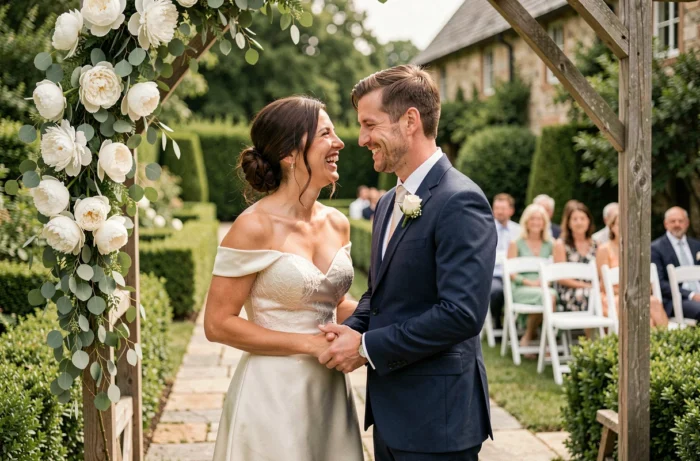
The secular ceremony offers complete freedom regarding the proceedings, texts, and speakers. Unlike a religious ceremony, no liturgical framework is imposed. Couples write their vows, choose readings, and designate an officiant from among their loved ones.
The risk, known to organizers, is producing a ceremony that is too long or poorly paced. Limiting the duration to about thirty minutes and alternating words, music, and silences remains a frequently recommended basis by experienced officiants.
Reception Venue with Accommodation: A Format That Changes Organization
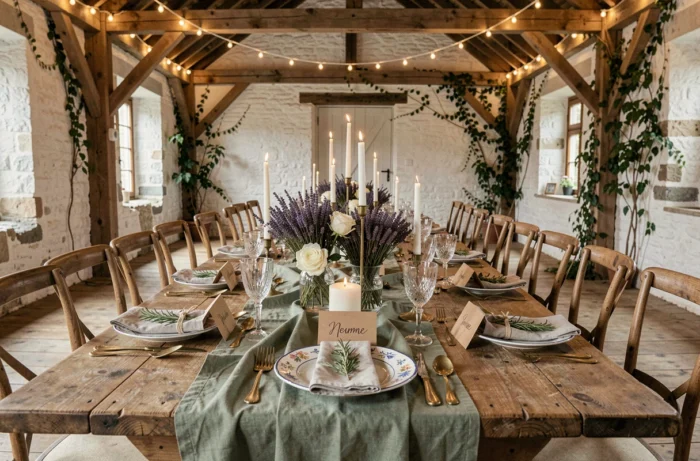
The choice of venue is evolving towards formats that combine reception and on-site accommodation. This type of venue (estate, group gîte, castle with outbuildings) profoundly alters the organization of the wedding.
- Guests stay from Friday evening to Sunday morning, which dilutes the pressure on a single evening and allows for spreading out the highlights
- The brunch the next day establishes itself as a true second phase of the wedding, more relaxed, where exchanges are often more sincere than during the dancing evening
- Logistics are simplified for families coming from afar, who do not have to look for a hotel or organize shuttles
A venue with accommodation reduces transport logistics and extends the time spent together. However, this format increases the accommodation budget and requires managing meals over two days instead of one.

Entertainment and Guest Experience: The True Marker of a Memorable Wedding
Entertainment and the experience lived by guests have become priority criteria, on par with the aesthetics of the wedding. The DJ and photographer are among the most sought-after service providers, but the reflection goes beyond just choosing a good professional.
A wedding where guests spend three hours sitting and waiting between courses leaves a mixed memory, regardless of the beauty of the venue. In contrast, a wedding where guests actively participate remains etched in memory. This can include a cocktail workshop during the cocktail hour, karaoke at the end of the evening, or simply a well-thought-out outdoor space with wooden games.
The question of the day’s rhythm deserves particular attention. Downtime between the ceremony and dinner is a recurring weak point of weddings. Planning a light activity (tour of the estate, organized group photo, collective game) during this slot prevents guests from dispersing.
Attire of the Couple: Dress, Suit, and Consistency with the Wedding Style
The choice of the wedding dress and suit remains a strong emotional item, often disconnected from the rest of the organization. A few points deserve to be stated factually.
- The style of the attire benefits from being consistent with the venue and format: a long train dress in a sloping field creates more constraints than successful photos
- The groom’s suit is often chosen last, even though it contributes as much to the visual harmony of the couple as the dress
- Alterations represent an often underestimated expense, both for the dress and the suit
Choosing attire based on the venue and format avoids disappointments on the big day. A fitting in real conditions (shoes, underwear, accessories) remains the best guarantee of comfort.
Organizing a personalized wedding on a constrained budget relies on deliberate choices, not on soft compromises applied to every item. Couples who identify their two or three absolute priorities early (meal, venue, entertainment, attire) and accept to let go of the rest build more coherent and memorable days than those who try to maintain everything at an average level.