Building an ecological house is not just about checking a “green materials” option in a catalog. The choice of builder determines the actual performance of the building over several decades, its carbon footprint during construction, and daily thermal comfort. It is also important to know how to distinguish a sincere commitment from a mere commercial argument.
Carbon thresholds of the RE2020: the technical filter that few individuals use
You may have heard of the RE2020, the environmental regulation that governs new construction. What many future homeowners do not know is that this regulation tightens its requirements in successive stages.
Specifically, the Ic Construction ceiling (the carbon indicator of materials and the site) for a single-family house has dropped from 640 kg CO₂ eq/m² for permits submitted between 2022 and 2024 to 530 kg CO₂ eq/m² since 2025. A new threshold of 415 kg CO₂ eq/m² will apply to permits submitted from 2028 onwards.
Why does this detail change everything in your choice of builder? Because a professional who merely complies with the threshold in effect at the time of your project exposes you to a building that is already outdated a few years later. A builder truly committed to ecological construction aims for the next thresholds today, which forces them to thoroughly rethink their material choices and construction processes.
Ask the builder directly about the Ic Construction level they are targeting. If they cannot answer you or remain vague, it is a warning sign. The Constructeurs Responsables display this type of indicator transparently, allowing for comparison based on reliable technical grounds.
Biosourced materials and local supply chains: what a committed builder truly masters
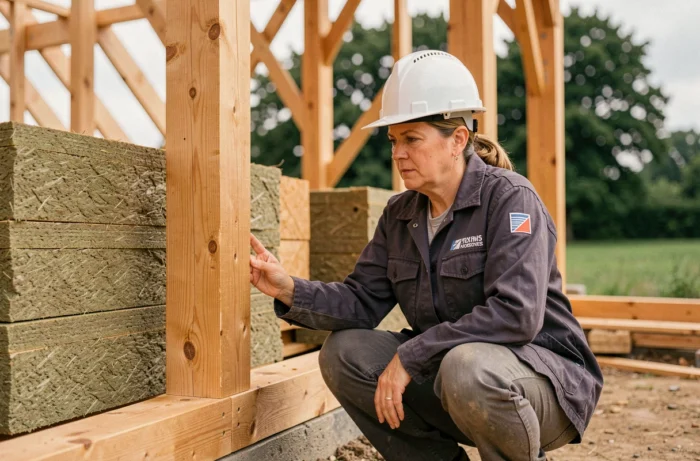
Wood, straw, hemp, cellulose wadding: biosourced materials are often highlighted in commercial brochures. The real question is not whether a builder offers them, but how they integrate them into a coherent construction system.
Supply and traceability of materials
A builder committed to eco-construction knows the origin of their materials. They work with identified local supply chains and can explain where the structural wood comes from, which supplier produces the biosourced insulation, and how these choices reduce the carbon footprint of transportation.
A builder who cannot name their suppliers does not have a real environmental approach. They merely check boxes in a technical description without mastering the supply chain.
Technical compatibility between materials
Combining wood fiber insulation with an unsuitable vapor barrier or installing hemp without properly managing the wall’s humidity compromises the durability of the whole. Expertise is verified in the builder’s ability to explain the interactions between materials, not just list them.
During your discussions, ask specific questions about air tightness management, thermal bridge treatment, and membrane selection. Technical answers reveal the actual level of competence in sustainable construction.
Checking the ecological commitment of a house builder: concrete evidence
Labels and certifications provide a first reference point, but they are not enough to assess a global commitment. Here are the concrete elements to examine before signing:
- Past achievements with measured performance: ask for air tightness test results and, if possible, feedback from homeowners after one or two winters. A reliable builder will agree to put you in touch with former clients.
- Site and waste management: an ecological site sorts its waste, limits noise pollution, and reduces water consumption. Inquire about the builder’s concrete practices in this regard.
- The ability to anticipate future regulatory requirements: since May 1, 2026, the RE2020 has expanded to almost all new buildings. A builder who has integrated these developments before their entry into force demonstrates active technical monitoring.
- Transparency about costs: a detailed itemized quote is the minimum expected. Beware of global prices without breakdowns between structure, insulation, energy equipment, and finishes.
Actual energy performance and bioclimatic comfort: beyond the DPE
The energy performance diagnosis (DPE) of a new home provides a theoretical estimate. Actual performance depends on the quality of implementation, the orientation of the building, and the overall bioclimatic design.
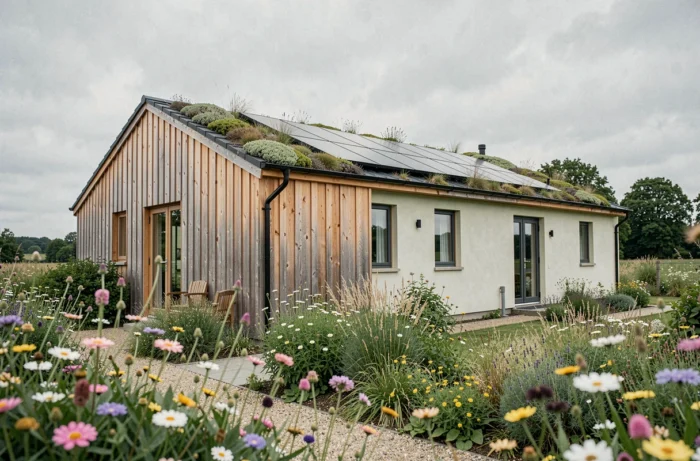
A competent builder in bioclimatic homes studies the immediate environment of the plot: solar exposure, prevailing winds, vegetation or built masks. The orientation and arrangement of openings determine heating needs far more than the thickness of insulation.
Ask the following question: how does the builder adapt their plans to the plot you have chosen? If they offer you a standard model without a prior site visit, the bioclimatic approach is merely a sales argument.
The heating and hot water production systems complement passive design, not replace it. An efficient heat pump in a poorly oriented house will always consume too much energy. Bioclimatic design takes precedence over equipment choices.
A project for an ecological and sustainable house is built on technical evidence, not on promises. The targeted carbon threshold, material traceability, site management, and bioclimatic adaptation to the plot form the four pillars of a verifiable commitment. By confronting each builder with these concrete criteria, you will quickly distinguish those who truly build differently from those who merely claim to do so.