
DIY and woodworking are going through a period where benchmarks are shifting. Between a French market in a correction phase after several years of euphoria, increasingly complex renovation projects, and workshop techniques that are increasingly integrating digital tools, the data paints a contrasting picture. Which segments are growing, which are declining, and where is the value concentrated for both DIY enthusiasts and woodworking professionals?
Wood Decking: Cost Items That Comparisons Underestimate
Most online guides compare the price per square meter of decking boards. This approach masks a reality documented by the 2026 guide from IdComposite: structure, fasteners, site preparation, and labor weigh as much as the boards.
Excavating the ground, laying a geotextile, crushed gravel, and adhering to a minimum slope to avoid water stagnation have once again become central topics in specialized content. These preparation steps constitute a significant portion of the overall budget, which basic quotes often overlook.
| Expense Item | Visibility in Public Quotes | Real Impact on Budget |
|---|---|---|
| Decking Boards | Always Displayed | About half of the project |
| Supporting Structure (joists, pedestals) | Sometimes Mentioned | High |
| Site Preparation (excavation, geotextile, gravel) | Rarely Detailed | High, especially on clay soil |
| Stainless Steel Fasteners and Fixings | Often Neglected | Moderate but Recurring |
| Labor or Time Spent | Variable | Can Exceed Material Costs |
IdComposite recommends thinking in terms of cost over ten years rather than purchase price. A more expensive composite wood deck to install may end up being cheaper than a treated softwood that requires annual maintenance. This long-term calculation radically changes the hierarchy of options.
To follow this type of analysis applied to wood projects, the news on Les Copeaux regularly documents feedback from workshops and job sites.

DIY Market in France: What the 2024 Slowdown Reveals
The French DIY market is no longer following the upward trajectory of the post-Covid years. According to the study by IntoTheMinds, revenue declined by 4.3% in 2024, to €22.1 billion. This decline marks the end of a cycle of exceptional growth fueled by remote work and successive lockdowns.
Category analysis shows disparities. Energy renovation remains a strong segment, supported by public aid schemes. In contrast, decoration and small tools are declining, victims of an uncertain economic context and pressured purchasing power.
Distribution Channels: Restructuring Accelerates
Large DIY stores retain the majority of sales, but their share is decreasing in the face of rising online purchases and specialized circuits. Brands that invest in technical advice and tailored service are faring better than those that rely solely on volume.
The year 2025 is expected to be better than 2024 according to IntoTheMinds, although it will not reach the levels of 2021-2022. The market is entering a maturity phase where growth is concentrated on a few segments: energy renovation, outdoor development, and specialized tools.
Woodworking and Automation: Techniques Changing the Workshop
Woodworking is not escaping digitization. Automation is now treated as a strategic lever for 2026, even in small workshops. Three axes stand out:
- CNC (Computer Numerical Control) is becoming more accessible with entry-level machines for skilled amateurs, reducing the gap between artisanal prototyping and semi-industrial production
- 3D design software suited for wood (like SketchUp, Fusion 360) allows testing of assemblies before the first cut, limiting errors and material waste
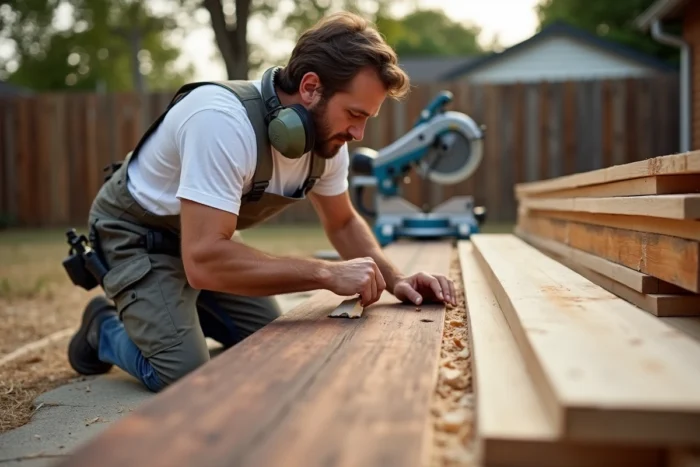
- High-capacity battery-powered tools are gaining in power and autonomy, making mobile workshops more viable for outdoor projects like decks or frameworks
This trend does not replace manual skills. French communities like L’Air du Bois demonstrate that traditional restoration and digital tools coexist in the same workshops. A cabinetmaker can use a CNC for rough cutting and then finish by hand with classic assembly techniques.
Professional Tools Accessible to Individuals
Manufacturers are adapting their professional ranges into consumer versions. Compact impact drivers, cordless routers, trimmers: these tools, once reserved for craftsmen, are now found in catalogs aimed at demanding DIYers. The selection criteria are shifting from price to battery compatibility and component durability.
Energy Renovation and Wood: The Segment Driving the Market
Among DIY and renovation activities, insulation and energy performance of housing are concentrating an increasing share of demand. Wood plays a particular role: insulating cladding, high-performance joinery, wooden frames for extensions.
This segment is resisting the general slowdown because it responds to regulatory and economic constraints. The energy bill pushes homeowners to invest even in times of uncertainty, where a decoration project can be postponed.
Wood products intended for energy renovation require special attention to certifications and installation standards. The quality of implementation directly affects thermal performance, which values trained DIYers and specialized artisans compared to entry-level solutions installed without preparation.
The DIY market in France is refocusing on high-value-added projects. Data from 2024 confirms that the era of impulsive tool purchases is behind us. What is progressing is energy-driven renovation, long-term outdoor developments, and durable tools. Woodworking, whether artisanal or assisted by digital tools, remains at the heart of this restructuring.