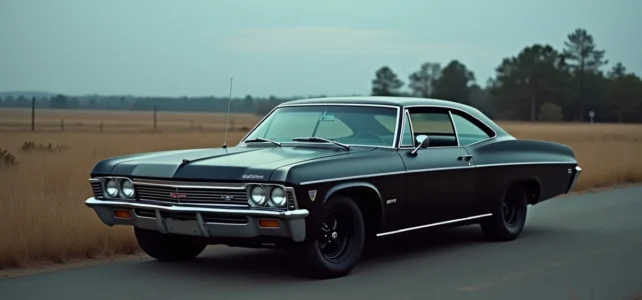
The 1967 Chevrolet Impala seen in Supernatural is a 2-door hardtop without a central pillar, designated under the Sport Coupe body style. This technical detail immediately eliminates any 4-door Impala from the same year, despite superficial similarities. Authenticating a vehicle linked to the series or validating the quality of a replica requires mastery of several specific criteria regarding bodywork, engine, and equipment, well beyond just the black color and the model year.
2-Door Hardtop Body: The Criterion That Disqualifies Most 1967 Impalas
The 1967 Impala range included several configurations: 4-door sedan (Sedan), 4-door hardtop (Sport Sedan), 2-door coupe (Sport Coupe), and convertible. The car from the series belongs to the Sport Coupe category, recognizable by the absence of a pillar between the front and rear windows when they are down.
From a side view, the roof profile differs significantly between a 2-door and a 4-door. The 4-door has a visible central pillar and a higher roofline at the rear. Confusing the two configurations remains the most common mistake among sellers who advertise a black 1967 Impala as a “Supernatural car.”
Before examining any other details, knowing how to verify a Supernatural Ford Impala starts with this bodywork check, which serves as the first reliable authentication filter.
License Plates and Series-Specific Accessory Details
In Supernatural, the Impala changes license plates several times over the seasons. These fictional plates are documented by fan communities and serve as a marker of authenticity for well-crafted replicas. A serious replica reproduces the correct plates for the chosen reference season.
Exterior Elements Specific to the Filming Vehicle
The main vehicle in the series features details that distinguish it from a factory-standard 1967 Impala:
- The paint is a solid glossy black, without side stripes or additional chrome inserts beyond the original equipment.
- The trunk conceals a weapons compartment specifically designed for filming, with a false bottom that lifts. This purely scenic detail is found on the most advanced replicas.
- The mirrors, wheel covers, and door handles match the period finish, with no visible modernization.
A 1967 Impala sold as “screen-used” (actually used on set) should show signs of modification consistent with filming needs: mounting points for cameras, chassis reinforcements, or lighting supports.
V8 Engine and Transmission: What the Series Requires as a Reference
Dean Winchester drives an Impala equipped with a gasoline V8 engine. The deep, characteristic sound of the engine, audible in many scenes, corresponds to a large-displacement V8 block typical of Chevrolet production in the late 1960s.
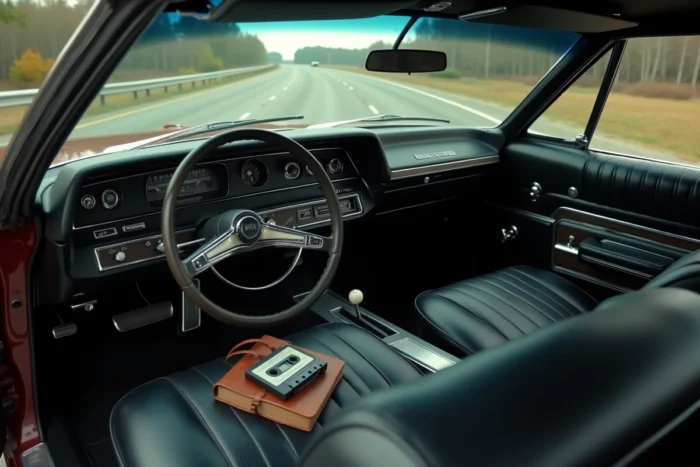
The transmission is a 3-speed automatic, visible in interior scenes where the gear lever appears on the steering column. A faithful replica reproduces this configuration rather than a manual transmission or a floor shifter, options that existed in 1967 but do not match the vehicle from the series.
Identifying an Original Engine or a Replacement
In the market for classic American cars, many 1967 Impalas have undergone engine replacements over the decades. An original block bears casting numbers and a partial VIN code on the engine block, verifiable by cross-referencing with the registration or American title.
A replaced engine does not disqualify the car as a basis for a replica, but it radically changes its value for a collector seeking a “matching numbers” vehicle (original engine, transmission, and bodywork matched).
Filming Replica or Screen-Used Vehicle: Two Distinct Markets
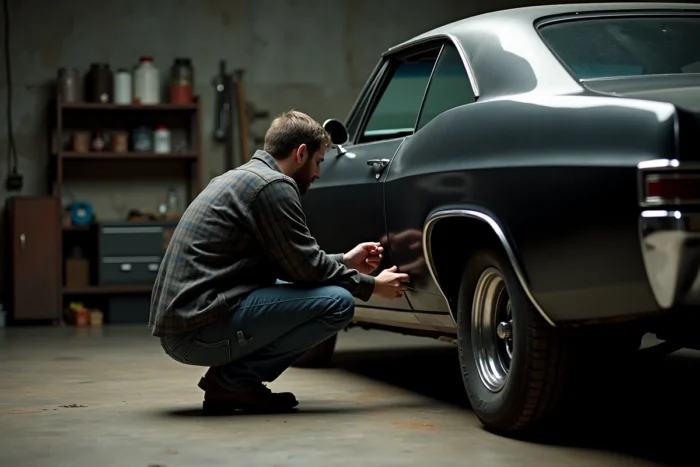
The production of Supernatural used several 1967 Impalas over the fifteen seasons. Some were used for stunt scenes, while others were for close-ups. The stunt vehicles were often heavily damaged and then repaired or replaced.
A vehicle presented as “screen-used” requires solid documentary traceability: certificate from the production company, dated set photos, chassis number corresponding to filming records. Without this documentation, the claim remains unverifiable.
What Differentiates a Good Replica from a Bad One
The majority of black 1967 Impalas sold under the Supernatural label are replicas. Their quality varies significantly:
- A high-end replica starts from a real 2-door hardtop 1967, with period black paint, original chrome, and faithful interior layout (bench front seat, unmodified dashboard).
- A mid-range replica sometimes uses an Impala from a neighboring year (1966 or 1968), whose grille and taillights differ significantly from the 1967 model year.
- The least reliable replicas are based on modified 4-door bodies or repainted Bel Air/Biscayne models, which lack the proportions and finishes of an Impala.
The taillights serve as a quick reference: those from 1967 are rectangular and arranged in three segments per side, a design unique to that production year.
The Supernatural replica market remains active, driven by a community of fans dedicated to detail accuracy. The price difference between a rough replica and a faithful replica based on the correct model can be very significant. Checking the body configuration, exact model year, and consistency of chrome elements with the 1967 model remains the foundation of any authentication, whether the vehicle has rolled in front of the cameras or not.