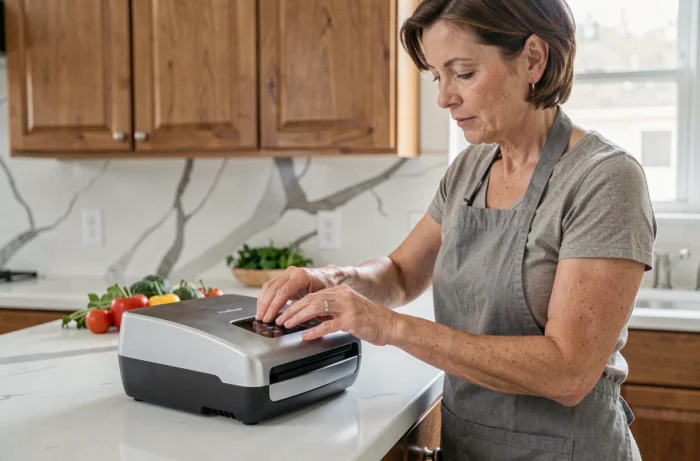
The FoodSaver FFS005 is a home vacuum packaging machine manufactured by Jarden Consumer Solutions (a trade name of Sunbeam Products, Inc.). Its main function is to remove air from a heat-sealable bag and then seal it airtight to extend food preservation. Its user manual covers all the steps, from creating a bag from a roll to the final sealing, including the use of compatible accessories.
Closing the lid and vacuum cycle of the FoodSaver FFS005
Before considering settings or bags, the physical handling of the lid deserves special attention. User feedback regularly reports that the device refuses to vacuum or that the lid reopens during the cycle. The cause identified by FoodSaver customer service is almost always the same: both side latches must be engaged until they click.
If only one side is locked, the vacuum does not form correctly in the vacuum chamber. The device may then run empty or stop without sealing the bag. This point is not always highlighted in product sheets, but it is crucial for the proper functioning of each cycle.
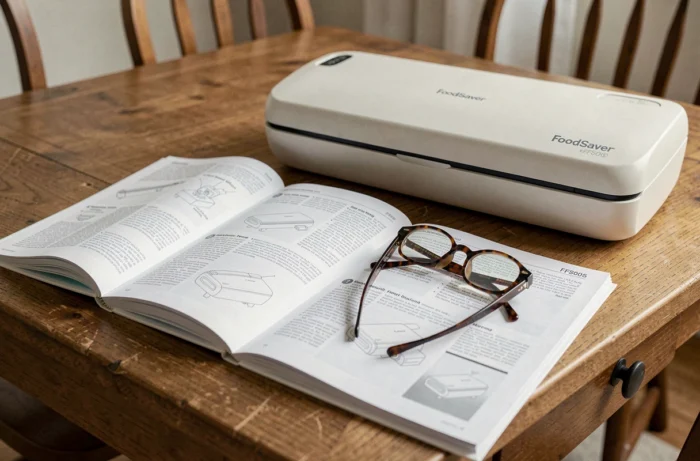
To find all handling instructions, including diagrams for positioning the bag in the trough, you can consult the FoodSaver FFS005 manual available for download directly in PDF format.
Creating a bag from a FoodSaver roll: step by step method
The FFS005 works equally well with pre-cut bags and rolls. The manual precisely describes the procedure for making a custom bag, allowing you to adapt the size of the packaging to each food item.
Cutting and first seal
The roll is placed in the dedicated compartment, textured side up. You pull the desired length, then close the lid to make the first seal on the open edge. This seal creates the bottom of the future bag.
Once the seal is complete, cut the roll using the integrated slider. The resulting bag is open on one side (to insert the food) and sealed on the other.
Filling and sealing
The food is placed in the bag, leaving enough space between the contents and the opening. This margin allows the vacuum system to operate without food residues rising into the trough. A free space of at least a few centimeters is recommended by the manual to ensure a clean seal.
You then insert the open end of the bag into the vacuum trough, close the lid (both latches), and start the cycle. The device vacuums the air and then automatically seals the bag.
Liquid and moist foods: the operational limit of the FFS005
Vacuum packaging soups, marinades, or sauces is one of the most common pitfalls with this type of machine. When the vacuum cycle starts, the liquid is sucked in with the air and can damage the sealing area, or even rise into the internal mechanism.
The technique recommended by specialized guides is pre-freezing. You pour the liquid preparation into the bag, lay it flat in the freezer until the contents are solidified, and then proceed with the normal vacuum cycle. This method prevents any liquid suction and produces a reliable seal.
For simply moist foods (marinated meats, blanched vegetables), careful wiping before bagging reduces the risk without requiring prior freezing.
Compatibility of FoodSaver bags and accessories
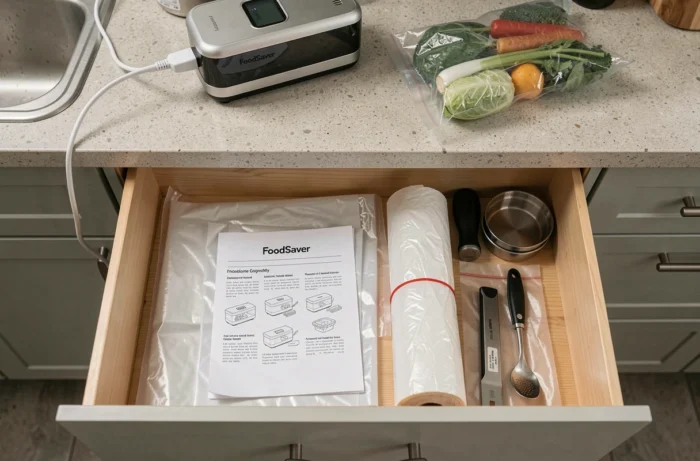
The FFS005 is designed to work with FoodSaver brand bags and rolls. In practice, compatibility with generic embossed bags exists, but users report variable results: some third-party bags do not trigger the vacuum cycle correctly.
The embossed (textured) side of the bag plays a precise technical role. The micro-channels created by the embossing allow air to flow to the pump during vacuuming. A smooth or insufficiently textured bag prevents air extraction.
The FoodSaver system also offers accessories to seal jars or rigid containers, via an adapter and a vacuum hose. The manual details the references compatible with the FFS005 model.
Routine maintenance and troubleshooting of the FoodSaver FFS005
Maintenance focuses on two sensitive areas: the vacuum trough and the sealing bar.
- The trough collects residual liquids sucked in during the cycle. It can be removed and cleaned with soapy water after each use involving moist foods.
- The sealing bar (foam gasket and heating wire) must remain clean and dry. Food residues in this area cause incomplete seals or air leaks in the bag.
- The upper gasket of the lid, in direct contact with the bag, should be checked regularly. A worn or dirty gasket reduces the airtightness of the vacuum chamber and prolongs cycles.
In case of vacuum failure despite a properly closed lid, the manual recommends checking that the bag is correctly positioned in the trough and that no folds are blocking the airflow.
Signs of wear to watch for
A cycle that lasts abnormally long without sealing, or a device that overheats, usually indicates a problem with the gasket or sealing bar. Replacing these wear parts extends the lifespan of the device without requiring complex repairs.
The FoodSaver FFS005 remains an entry-level device whose suction power is suitable for regular home use. Its manual covers the vast majority of common situations, from preserving meats and vegetables to sealing individual portions for sous vide cooking. Keeping the trough clean and following the lid locking procedure is sufficient to avoid most malfunctions reported by users.