
SYPLO, short for Housing Priority System, is software shared between the State, social landlords, the SIAO, and Action Logement. It records, at the departmental level, applicants for social housing recognized as a priority. Supporting a priority household with the Syplo housing file requires understanding the registration mechanics, the interactions between information systems, and the concrete bottlenecks that social workers encounter daily.
Transition to SI-SIAO: What Changes for the Fluidity Labeling
As of March 31, 2026, the “SYPLO / Fluidity” labeling is closed for housed households ready for autonomous housing. This function is now exclusively handled by the SI-SIAO. The change is not cosmetic: it modifies access rights, the types of accepted situations, and the documents to be provided.
For social teams, this transition requires mastering a new interface. The access rights to SI-SIAO are not the same as those of SYPLO, and some professionals must request specific authorizations from their departmental SIAO.
However, historical “fluidity” files remain tracked in SYPLO until their effective allocation. A social worker may therefore find themselves managing both the old and new circuits simultaneously, which requires rigorous follow-up to ensure no file is left pending. The Syplo housing file on Partenariat Immo details this operational chain step by step.
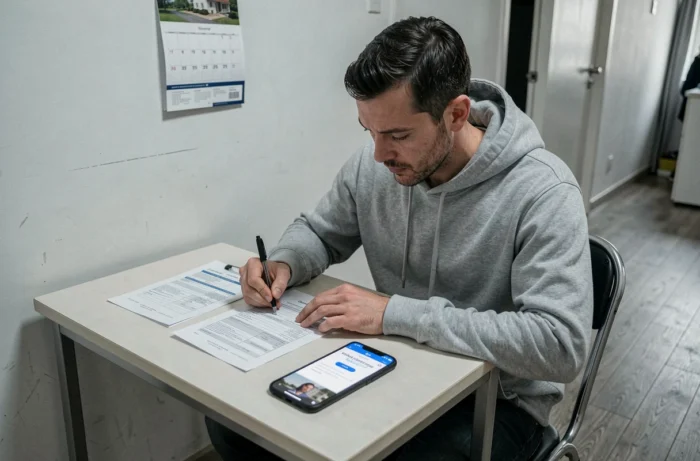
Active SNE Request and Syplo File: A Technical Link Not to Be Overlooked
The National Registration System (SNE) manages all social housing applications in France. The SNE request must remain active for a SYPLO file to have its effects. If the SNE request expires due to lack of annual renewal, the household loses visibility with landlords, even if it is labeled as a priority in SYPLO.
This technical link is a frequent source of invisible blockages. The household does not always receive a clear alert when their SNE request is nearing expiration. The social worker accompanying the file must therefore integrate the SNE renewal into their follow-up calendar, just like reminders to the SIAO or landlords.
Regular Checks to Perform
- Confirm the expiration date of the SNE request and initiate the renewal at least one month before expiration.
- Ensure that the household’s information (family composition, resources, desired municipality) is identical between the SNE and SYPLO to avoid inconsistencies that delay processing.
- Verify that the unique departmental number is properly linked to the SYPLO file, as a mismatch in identifiers can make the household untraceable during allocation commissions.
Coexistence Period of the Two Flows: Managing Timelines Without Losing the Household
The closure of the fluidity labeling in SYPLO does not eliminate ongoing files overnight. Two flows now coexist: historical files processed through SYPLO and new requests initiated exclusively in the SI-SIAO.
For the household, this coexistence is difficult to understand. Clearly explaining which circuit their file is in, who is processing it, and what stage it is at helps reduce anxiety and repetitive inquiries to the social referent.
Operational Points of Vigilance for the Social Worker
The main risk is the loss of information between the two systems. A file initiated in SYPLO before the transition will not automatically be duplicated in the SI-SIAO. If the household’s situation changes (birth, separation, job loss), the update must be made in the correct tool, or it may skew the assessment of their priority.
Processing times vary by department. In some areas, allocation commissions prioritize older SYPLO files to clear the backlog. In others, new SI-SIAO files benefit from an expedited process. Knowing the local policy allows for adjustments in the support strategy.

Social Support and Syplo Rehousing Project: Continuous Adjustment
Being registered in SYPLO or SI-SIAO does not automatically trigger a housing offer. Social landlords consult these tools when they have housing to allocate, but they also assess the household’s ability to occupy the housing independently.
Social support therefore goes beyond just compiling the administrative file. It must also prepare the household for the steps following labeling:
- Work on the household’s solvency (assistance with APL, FSL, rental guarantee applications) so that the landlord has a complete financial file at the time of the commission.
- Adapt the rehousing project if the situation evolves: a household labeled for a T3 in an urban area may see its needs change after a separation or the arrival of a child. Updating the SYPLO file in real-time avoids a mismatch between the landlord’s offer and the household’s reality.
- Anticipate refusals of offers: a household that refuses several housing options without legitimate reasons may lose its priority. Preparing acceptable criteria in advance (location, floor, proximity to transport) reduces this risk.
The intersection of SYPLO data and the SNE information center allows some housing services to measure the actual time between labeling and effective allocation. This data, when accessible, helps the social worker provide the household with a realistic estimate of the waiting time rather than a vague promise.
The transition to SI-SIAO redistributes responsibilities among actors, but the role of the social referent remains central: keeping the file up to date, following up with the right contacts, and above all, maintaining the link with a household whose wait often counts in months. A technically complete file is not enough if no one checks, quarter after quarter, that each piece of the administrative puzzle remains in place.