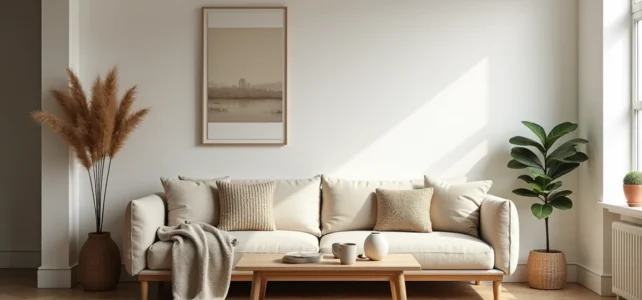
A corduroy sofa that clashes with the light fixture above, an accent wall hastily painted in an Instagram-seen color, cushions stacked illogically: we’ve all experienced that moment when the room looks nothing like we envisioned. The problem rarely stems from the budget. It comes from the order in which we make decisions.
Before choosing a style or a palette, three concrete parameters must be addressed: the available light, the actual volumes of the room, and the materials already in place (flooring, woodwork, radiators). This foundation guides all the trendy decor of an interior, not the other way around.
Natural light and color choices: the first decor arbitration
In a north-facing living room with a single window, applying a deep terracotta on all walls will overwhelm the space. The same shade, in a south-west facing room, takes on a completely different dimension. So, we always start by observing the light at different times before fixing anything.
Neutral tones (linen, greige, off-white) remain a safe bet for poorly lit rooms. They serve as a backdrop on which we add one or two touches of warm color through textiles or a piece of furniture, not through the walls. In a well-lit space, we can afford more saturated shades (brown, ochre, burgundy) that absorb light without darkening.
To find combinations that work in your interior, exploring decor on Concept Maison allows you to cross-reference styles and space constraints before making purchases.
One often overlooked point: the color of the existing floor. A honey-colored parquet leads to cool or neutral tones in contrast. A light gray tile better supports warm shades. Ignoring this parameter risks creating a whole that seems perpetually “off.”
Biophilic decor in apartments: beyond green plants
Biophilic decoration is the fastest-growing trend in urban apartments in recent years. This movement is often reduced to “putting plants everywhere,” but the principle goes further: it’s about integrating natural elements that concretely enhance daily well-being.
In practice, this involves three levers:
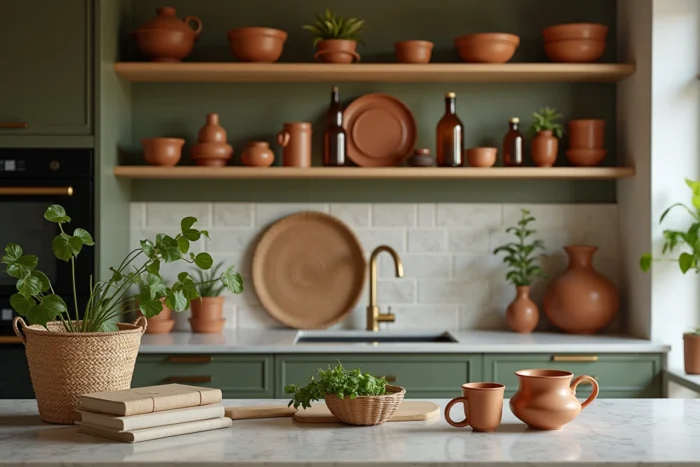
- Visible raw materials: unvarnished wood, stone, artisanal ceramics, linen, boucle wool. They bring varied textures that the eye and touch perceive as soothing.
- Maximized natural light: sheer curtains rather than thick blackout ones, mirrors positioned facing windows to redistribute brightness, removal of tall furniture that blocks light passage.
- Targeted greening: two or three well-placed plants (on a ledge, hanging) are better than a poorly maintained jungle. We choose species suited to the actual light of the room, not to the light we wish we had.
What makes the difference between a successful “nature” interior and one that resembles a garden center is restraint. Three natural materials maximum per room are enough to create coherence without overwhelming the eye.
Invisible technology: the decor trend that no one sees
Interior design is currently evolving towards what can be called discreet technology. The idea: to make cables, boxes, screens, and connected devices disappear to preserve the aesthetics of a room while keeping advanced functions (light management, temperature, multi-room audio).
In practice, this translates into technical storage integrated into furniture: a sideboard with concealed cable passage, a TV unit without a visible TV (replaced by an ultra-short throw projector), speakers embedded in the ceiling or walls.
Feedback varies on this point depending on the housing configuration. In an old apartment with moldings, integrating home automation without heavy work remains complicated. In a recent construction or renovation, it’s simpler because conduits are planned.
The decor challenge is real: a living room without visible cables looks immediately more polished than a space equipped with the same furniture but with a visible power strip and a router sitting on the shelf. Before choosing a new designer piece, checking that it can neatly accommodate existing electronics avoids many disappointments.
Furniture and materials: choosing wood and shapes that last
Curved and organic lines dominate current furniture design. Tables with rounded edges, enveloping armchairs, shelves with curved supports: these shapes soften any space and break the rigidity of standard rectangular rooms.
On the materials side, dark wood (walnut, smoked oak) is making a comeback after years of light Scandinavian wood. A walnut piece in a room with light walls creates a strong visual anchor. Paired with brushed brass on handles or a lamp base, the warm/cool contrast works effortlessly.
- For a small space: favor a dark wood table with slender legs, which anchors the room without weighing it down.
- For a large living room: a low walnut piece (sideboard, console) against a light wall structures the room better than a painting.
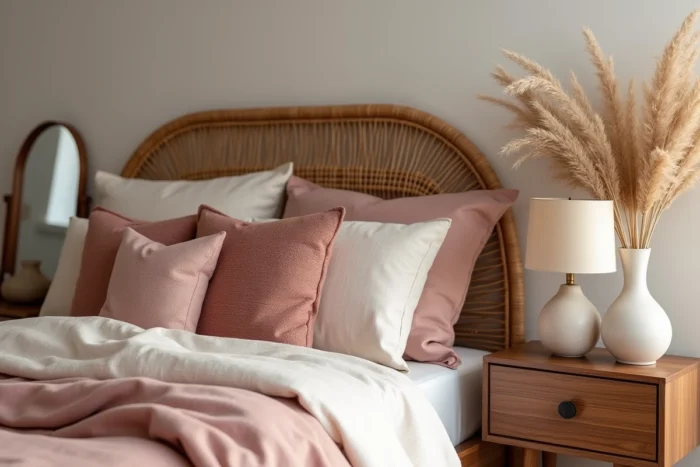
- For the bedroom: a natural wood headboard with washed linen bedding creates a coherent ensemble without an accumulation of decorative objects.
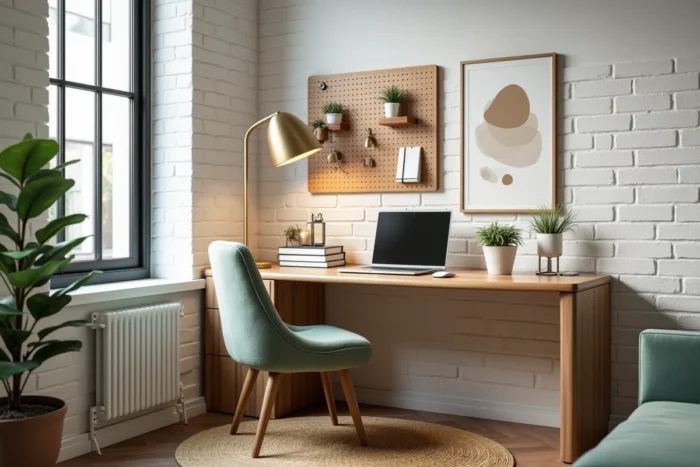
You don’t need to replace all your furniture to follow a trend. Changing handles, adding a natural material light fixture, or replacing a rug is often enough to refresh a room. The most sustainable interior decor rests on a neutral base that evolves with small touches, season after season, without throwing everything out.