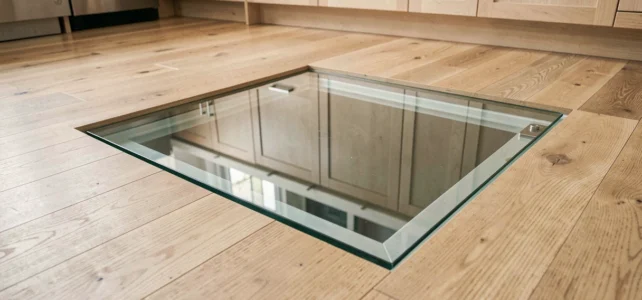
The glazing of a cellar hatch is not just an aesthetic choice. Type of glass, thickness, breakage behavior, thermal performance: each parameter affects the safety, comfort, and longevity of the installation. This article compares the main families of glazing used for glass cellar hatches, based on French regulatory requirements and the technical characteristics of each solution.
Tempered glass, laminated glass, or tempered laminated glass: comparative table of glazing for cellar hatches
| Type of glazing | Breakage mode | Retention after breakage | EN 12600 classification | Use for cellar hatch |
|---|---|---|---|---|
| Tempered glass | Fragmentation into small pieces (mode C) | Not guaranteed | 1C1 to 1C3 | Prohibited alone on accessible side |
| Laminated glass | Cracking with fragments retained on interlayer (mode B) | Yes | Minimum 2B2 in accessible area | Compliant with DTU 39 P5 |
| Tempered laminated glass | Fragmentation retained by interlayer (mode B) | Yes | Possible 1B1 | Recommended for high loads |
This table highlights a point that many online configurators do not clarify. A comparison of glass cellar hatches must first distinguish the breakage behavior before discussing thickness or price.
Regulatory obligation DTU 39 P5: why tempered glass alone is prohibited
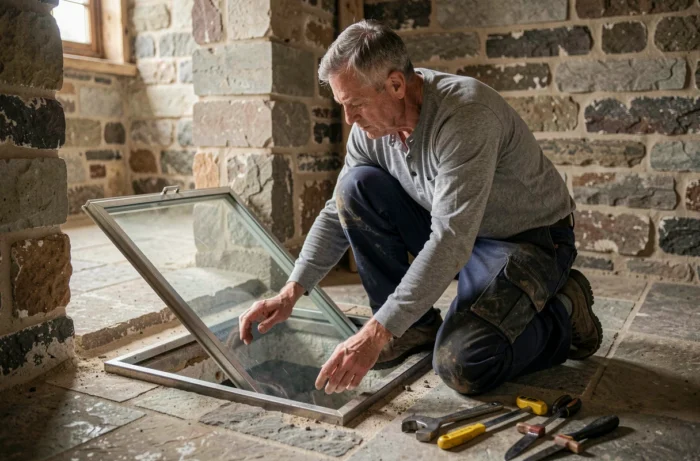
The French reference FD DTU 39 P5, coupled with the NF EN 12600 standard, requires safety laminated glass on the interior side for any accessible glazing. A cellar hatch flush with the ground falls into this category: it is walked on, exposed to falling objects, and accessible from the living space.
Tempered glass, even mechanically efficient, fragments into small pieces upon breakage (mode C). It does not stay in place. Only laminated glass (breakage mode B) retains the fragments thanks to its PVB or EVA interlayer, preventing a person from falling through the hatch after a breakage.
The minimum classification required in accessible areas is 2B2 according to the NF EN 12600 standard. For configurations serving as guardrails (hatch at the edge of a void, for example), the classification rises to 1B1. This distinction has direct consequences on the choice of glazing and its cost.
What this means for a glass hatch project
A quote offering simple tempered glass for a walkable cellar hatch is not compliant. Checking the EN 12600 classification of the proposed glazing helps eliminate non-compliant offers, regardless of their attractive price.
Thickness and composition of the glazing: technical criteria for a glass floor slab
The thickness of a glass cellar hatch depends on three factors: the span (free dimension between supports), the expected load, and the type of laminate chosen. Manufacturers generally size their slabs to support the typical loads in residential use.
- A two-layer laminate (two glasses bonded by a PVB interlayer) is suitable for small hatches with low spans, typically for a wine cellar with occasional passage.
- A three-layer laminate (triple laminated glass) is used for large hatches or frequent passages, offering superior mechanical resistance and better structural retention after breakage.
- The EVA interlayer, unlike classic PVB, is more resistant to humidity, a factor to consider for a cellar where condensation is frequent.
- Tempered laminated glass combines the impact resistance of tempered glass and the post-breakage safety of laminated glass. It allows for a reduction in total thickness for equivalent spans.
Requesting the technical data sheet of the glazing (composition, thickness of each layer, type of interlayer) remains the best reflex before validating a quote.
Thermal insulation and UV protection: glazing for wine preservation
A glass cellar hatch creates a thermal bridge between the living space and the cellar. Insulation depends on the type of glazing and the presence of an air or gas layer between the layers.
A simple laminate (two glasses + interlayer) offers limited insulation. To improve thermal performance, some manufacturers offer double laminated glazing: a safety laminated glass on the room side, an argon layer, and then a second glass on the cellar side. This configuration reduces thermal exchanges and limits condensation on the cold face.
UV filtering for wine cellars
Ultraviolet rays alter wine by accelerating oxidation. A standard clear glazing allows a significant portion of UV to pass through. For a wine cellar, an anti-UV treatment on the glazing or a filtering interlayer is necessary to protect bottles exposed to light passing through the hatch.
The tinted PVB interlayer or a low-emissivity glass with integrated UV filter meets this need. However, clear laminated glass without specific treatment is insufficient if the cellar contains bottles stored near the hatch.
Price and quotes for a glass cellar hatch: what affects the budget
The price of a glazed hatch varies significantly depending on the composition of the glazing, the dimensions, and the type of opening (manual or motorized). For the same dimensions, the transition from a two-layer laminate to a three-layer tempered laminate can double the cost of the glazing.
The items that weigh the most in a quote are not always those one might expect:
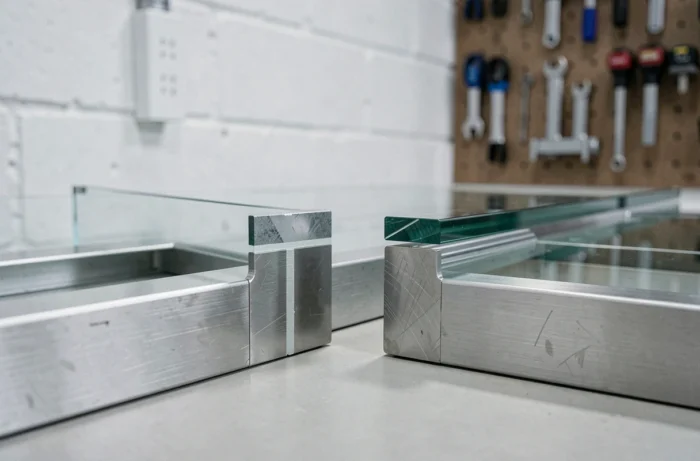
- The frame (steel, stainless steel, or aluminum) often represents a comparable share to the glazing itself.
- On-site installation, including cutting the floor slab and masonry work, generates significant additional costs.
- A motorized opening with an electric actuator adds a cost compared to a manual opening assisted by gas struts.
Comparing quotes solely based on the total price masks the quality differences in the glazing. Requiring the technical data sheet of the glass (EN 12600 classification, thickness, type of interlayer) allows for a comparison of truly equivalent offers.
The choice of glazing for a cellar hatch is based on one criterion that takes precedence over all others: the safety classification according to the NF EN 12600 standard. A laminate compliant with DTU 39 P5 guarantees retention after breakage. Everything else (thickness, insulation, UV filtering, motorization) revolves around this regulatory requirement, which conditions both the safety of occupants and the compliance of the project.